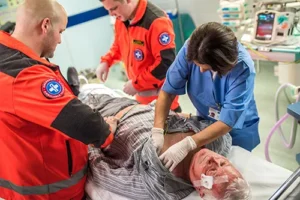
 Not all injuries and deaths in an emergency room result from accidents or medical conditions. Many are unfortunately due to negligent medical professionals or substandard hospital facilities. When this happens, patients and families are left with a mountain of bills, emotional distress, and the pain of knowing the incident could have been prevented. New Jersey law entitles victims of medical negligence to compensation, but claiming it is rarely easy.
For your emergency room negligence claim in New Jersey, contact The Grossman Law Firm. We are a top-rated local firm with over 27 years of experience fighting for the rights of injured individuals and bereaved families. Over our decades of service, we’ve won deca-millions in compensation for our clients and held many doctors and companies accountable.
We’re ready to listen to you in a free consultation. At Grossman Law, we charge no fees unless we win for you. Call us today at (732) 625-9494.
What Is Considered an Emergency Room Error in New Jersey?
Emergency room errors happens when ER doctors, nurses, or hospital staff fail to provide the standard of care you deserve, and that failure causes you harm. In New Jersey, patients who suffer injuries due to ER mistakes can file medical malpractice claims to recover compensation for their losses.
The Grossman Law Firm represents patients throughout New Jersey who have been harmed by emergency room errors. With deep experience in personal injury law, we understand how these cases work and what it takes to hold negligent healthcare providers accountable.
How New Jersey Medical Malpractice Law Works
New Jersey law requires you to prove several key elements to win an emergency room negligence case. You must show that:
- The healthcare provider owed you a duty of care
- The provider breached that duty by falling below accepted medical standards, and
- The provider caused your injury through that breach.
The “standard of care” refers to what a reasonably skilled medical professional would have done in similar circumstances. Emergency rooms are fast-paced and stressful, but that doesn’t excuse careless mistakes that harm patients. ER doctors and nurses must still meet basic professional standards.
The Affidavit of Merit Requirement
New Jersey has a special rule for medical malpractice cases. Under New Jersey’s medical malpractice laws, you must file an Affidavit of Merit within 60 days after the defendant answers your complaint. This sworn statement from a qualified medical expert must confirm that your healthcare provider likely fell below acceptable professional standards.
This requirement exists to weed out frivolous lawsuits. The expert who signs your affidavit must be licensed and practice in the same specialty as the defendant. For emergency room cases, this typically means another board-certified emergency medicine physician.
Statute of Limitations
The statute of limitations is a law that says you have two years from the date of your injury to file an emergency room negligence lawsuit in New Jersey. However, the state follows the “discovery rule.” This means if you couldn’t have reasonably known about the negligence when it happened, the two-year clock starts when you discovered (or should have discovered) the harm.
For example, if an ER doctor missed a diagnosis and you didn’t learn about it until months later when symptoms worsened, your filing deadline may be extended. Still, it’s best to consult with an attorney as soon as you suspect ER negligence caused your injury.
Common Types of Emergency Room Errors
Emergency rooms handle everything from minor injuries to life-threatening conditions. The pressure to make quick decisions can lead to serious mistakes. Some of the most common ER errors include:
- Misdiagnosis or delayed diagnosis is a leading cause of harm in emergency settings. Conditions like stroke, heart attack, and blood clots require fast treatment. When ER staff miss these diagnoses, patients lose precious time and may suffer permanent damage.
- Medication errors happen when patients receive the wrong drug, the wrong dosage, or a medication that interacts dangerously with other drugs they’re taking. In the chaos of a busy ER, mix-ups occur more often than they should.
- Failure to admit or monitor patients can have deadly consequences. Some conditions need observation over several hours. Sending patients home too soon or failing to watch them closely enough can allow treatable problems to become fatal ones.
- Communication failures between staff members also contribute to ER negligence. When one nurse doesn’t pass along critical information to the next shift, or when test results get lost in the shuffle, patients pay the price.
If you suspect that any kind of ER negligence caused harm to you or your loved one, talk to us at The Grossman Law Firm. In a free consultation, we’ll assess your case and guide you on your next steps. When we handle medical malpractice claims, we work with medical professionals to strongly establish the error that occurred.
Who Can Be Held Liable?
Multiple parties may share responsibility for emergency room negligence:
ER physicians can be held liable when their diagnostic or treatment decisions fall below professional standards. Nurses may be responsible for medication errors, monitoring failures, or failure to alert doctors about changing patient conditions.
Hospitals themselves can face liability for understaffing, inadequate training, faulty equipment, or poor safety protocols. New Jersey law recognizes that healthcare facilities have a duty to maintain systems that protect patients from preventable harm.
At The Grossman Law Firm, Attorney Scott D. Grossman works with medical experts to identify all potentially liable parties in ER negligence cases. This thorough approach helps ensure victims receive full compensation for their injuries.
Damages You May Recover
If you prove emergency room negligence caused your injuries, you may be entitled to compensation for losses such as, but not limited to:
- Medical expenses, including past and future treatment costs related to your injury
- Lost wages if your injury prevented you from working
- Reduced future earning capacity if you’ve suffered long-term disability
- Pain and suffering for the physical discomfort and emotional distress you’ve endured.
New Jersey follows a modified comparative negligence rule. If you share some fault for your injuries (for example, if you left the ER against medical advice), your compensation may be reduced proportionally. However, you can still recover as long as your own fault wasn’t greater than the defendant’s.
Supporting Data on ER Diagnostic Errors
Research from the Agency for Healthcare Research and Quality provides sobering statistics about emergency room care:
- Approximately 5.7% of ER patients receive an incorrect diagnosis.
- About 2% of ER patients suffer an adverse event due to diagnostic error.
- Five conditions account for 39% of serious misdiagnosis-related harms: stroke, heart attack, aortic aneurysm/dissection, spinal cord compression/injury, and venous thromboembolism.
These numbers highlight why ER negligence is such a serious public health concern and why patients need strong legal advocates when harm occurs.
Frequently Asked Questions
How long do I have to file an ER error lawsuit in New Jersey?
You generally have two years from the date of your injury to file. If you couldn’t have reasonably discovered the negligence right away, the deadline may be extended under New Jersey’s discovery rule. However, waiting too long can hurt your case, so contact an attorney promptly if you suspect ER negligence.
Do I need an expert witness for my emergency room negligence case?
Yes. New Jersey requires an Affidavit of Merit from a qualified medical expert stating that your healthcare provider likely deviated from accepted standards. At Grossman Law, our attorney will help you find appropriate experts to support your claim.
Can I sue the hospital itself for ER negligence?
Hospitals may be held liable for their own negligence, such as understaffing or inadequate protocols. They may also be responsible for the actions of their employees. Your attorney will investigate to determine all parties who may share liability.
What if the ER was just very busy when I was treated?
High patient volume doesn’t excuse medical negligence. ER staff must still meet professional standards regardless of how busy the department is. If understaffing contributed to your injury, the hospital itself may bear responsibility.
Key Points to Remember
- Emergency room negligence occurs when ER staff fail to meet accepted medical standards and cause patient harm.
- New Jersey requires an Affidavit of Merit from a medical expert before your case can proceed.
- You typically have two years to file a lawsuit, though the discovery rule may extend this deadline.
- Hospitals, doctors, and nurses may all share liability depending on the circumstances.
- Research shows diagnostic errors affect approximately 5.7% of ER patients, making this a significant patient safety concern.
Contact The Grossman Law Firm for Help With Your Personal Injury Case
If you or a family member suffered harm due to emergency room negligence, you deserve answers and may be entitled to compensation. Understanding your legal options is the first step toward holding negligent healthcare providers accountable.
Scott D. Grossman, Esq. is a first-rate personal injury lawyer in New Jersey who has won millions in settlements and verdicts.
Schedule a free consultation, call (732) 625-9494.
