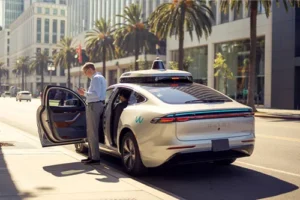
 If you’re injured in a Waymo accident in New Jersey, liability depends on what caused the crash. New Jersey’s product liability laws let you hold manufacturers responsible for defective autonomous systems. You may also have claims against other drivers who acted negligently or against Waymo itself if the technology failed. New Jersey requires all vehicles to carry liability insurance, personal injury protection, and uninsured motorist coverage, which applies to autonomous vehicles, too.
Why The Grossman Law Firm Can Help
As a top rated personal injury law firm serving clients throughout New Jersey, The Grossman Law Firm, LLC, has helped many individuals of rideshare accidents, navigate complex vehicle accident claims and understands how state laws apply to emerging technologies like autonomous vehicles.
Call the experienced lawyers at The Grossman Law Firm at (732) 625-9494 for a free consultation regarding your Waymo accident case.
How New Jersey Law Applies to Waymo Accidents
Currently operating in the manual testing phase with human drivers at Newark Airport; full driverless ride-hailing has not launched there yet, but Waymo includes operation of autonomous ride-hailing vehicles that use sensors, cameras, and artificial intelligence to navigate without human drivers. When these vehicles crash in New Jersey, several legal frameworks come into play.
New Jersey maintains mandatory insurance requirements for all vehicles registered or operating in the state. According to the New Jersey Motor Vehicle Commission, every vehicle must carry liability insurance, personal injury protection, and uninsured motorist coverage. (UM/UIM) Coverage is an extremely common, recommended, and widely purchased option; under the state’s minimum Basic Policy, it is not explicitly mandated by law like PIP and liability coverage are. However, it is an essential component of the Standard Policy and is highly relevant in case the at-fault party is uninsured. These requirements apply to autonomous vehicles just as they do to traditional cars.
The state’s product liability laws also play a role. New Jersey follows strict liability principles for defective products. This means if Waymo’s autonomous system had a design flaw, manufacturing defect, or failed to provide adequate warnings, injured parties may recover damages without proving negligence.
Who Can Be Held Responsible
Waymo accidents differ from traditional crashes because multiple parties, including companies, may bear responsibility. The injured person’s ability to recover depends on identifying who caused the harm.
The vehicle manufacturer or technology company faces potential liability when autonomous systems malfunction. If Waymo’s sensors fail to detect a hazard, or if the software makes dangerous decisions, the company may be liable under New Jersey’s product liability statutes. These laws cover design defects, manufacturing defects, and failure to warn consumers about known dangers.
Other drivers on the road remain responsible for their own negligence. Data from the National Highway Traffic Safety Administration shows that a substantial share of autonomous vehicle crashes involve human drivers running red lights, rear-ending stopped vehicles, or crossing center lines. In these cases, the at-fault driver’s insurance typically covers damages.
In some situations, liability is shared. New Jersey applies comparative negligence principles. If multiple parties contributed to the crash, damages are allocated based on each party’s percentage of fault.
The Grossman Law Firm, LLC, has experience investigating complex vehicle accidents to identify all responsible parties. Scott D. Grossman, Esq., regularly handles personal injury cases where liability isn’t immediately clear and multiple insurance companies are involved.
What the Data Shows About Waymo Safety
Understanding Waymo’s safety record helps frame realistic expectations for these cases. Research published in peer-reviewed journals provides important context.
A study examining over 7 million miles of Waymo operations found the vehicles had significantly fewer crashes than human drivers in the same locations. According to research available through the National Library of Medicine, Waymo vehicles showed an 80% reduction in injury-reported crashes and a 55% reduction in police-reported crashes compared to human benchmarks.
The NHTSA requires autonomous vehicle operators to report crashes where the automated system was engaged. This data collection helps identify safety issues and patterns in autonomous vehicle operations.
That said, crashes still happen. Between 2021 and 2024, hundreds of incidents involving Waymo vehicles were reported. Most weren’t Waymo’s fault. Many involved stationary Waymo vehicles being struck by other drivers or human drivers, causing collisions that autonomous systems couldn’t avoid.
Common Questions About Waymo Accidents in New Jersey
What should I do immediately after a Waymo accident?
Call 911 if anyone is injured. Document the scene with photos. Get contact information from witnesses. Request the Waymo incident report number. Seek medical attention even for minor symptoms. Contact a personal injury attorney before speaking with insurance adjusters.
Does my insurance cover Waymo accidents?
Your personal injury protection coverage applies regardless of who caused the crash. UM applies when the at‑fault party is uninsured or a hit‑and‑run; underinsured motorist (UIM) coverage is what may respond when a liable party’s limits are insufficient. Liability claims are typically directed against the at‑fault driver/owner and any other responsible entities (including possibly Waymo), and then their insurers respond. In many AV crashes, another human driver may be at fault; in those cases, that driver’s liability policy is primary. If Waymo or its vehicle is found at fault, claims may be pursued against the entities responsible and their liability insurers.
How long do I have to file a claim?
New Jersey’s statute of limitations for personal injury claims is generally two years from the accident date. Product liability claims follow similar timeframes. Don’t delay consulting an attorney.
Can I sue Waymo directly?
Yes, you may be able to sue Waymo or related companies if evidence shows the autonomous system caused the crash. You’ll need to prove the technology was defective or that Waymo failed in its duty to operate safe vehicles. These cases often require expert testimony about autonomous vehicle systems.
Key Points to Remember
- New Jersey’s insurance requirements currently apply to autonomous vehicles as motor vehicles
- Multiple parties may be liable: Waymo, other drivers, software developers, or manufacturers
- Product liability laws let you pursue claims without proving negligence if systems were defective
- Data shows Waymo has fewer crashes than human drivers, but accidents still happen
- You have a limited time to file claims under New Jersey law
Contact The Grossman Law Firm for Help With Your Waymo Injury Claim
If you’ve been injured in a Waymo accident, understanding your legal options is important. The technology is complex, and determining liability requires careful investigation.
The Grossman Law Firm, is a top-rated personal injury firm in New Jersey with lots of experience handling rideshare accident cases. Call (732) 625-9494 for a free consultation.
